
U.S. President Donald Trump will sign an executive order Thursday that fulfills a key campaign promise of shutting down the Department of Education.
According to a White House summary seen by Reuters, the move ensures the department – called “a big con job” by Trump – is no more. The plan is to shift much of the department’s duties to the states, where curricula is determined, as well as other agencies.
Trump’s new education secretary, Linda McMahon, has defended the president’s initiative achieving what would be his first shutdown of a cabinet-level agency.
The Trump administration has already been gutting the agency, as Breitbart News reported.
Its workforce is being slashed in half and there have been deep cuts to the Office for Civil Rights and the Institute of Education Sciences, which gathers data on the nation’s academic progress, much to the anger of Democrat opponents.
According to Reuters, the order directs McMahon to, “take all necessary steps to facilitate the closure of the Department of Education and return education authority to the States, while continuing to ensure the effective and uninterrupted delivery of services, programs, and benefits on which Americans rely.”
NPR reports the closure has been expected since early February, when the White House revealed its intentions but withheld the action until after McMahon’s Senate confirmation.
It now arrives more than a week after the Trump administration has already begun sweeping layoffs at the Education Department.
In his 2024 election platform, Trump promised to close the department “and send it back to the states, where it belongs,” citing its indolence, misplaced priorities and drain on taxpayer dollars for little return.
More at:

This Mess Is of Your Own Making, Chief Justice Roberts
Several days back, when one of the near-countless cases of judicial overreach in which partisan Democrat operatives in black robes issued absurd orders delaying presidential orders involving immigration issues or spending reforms or other changes well within the sole purview of the executive branch made its way to the Supreme Court for review, this column discussed a piece by the Federalist’s John Daniel Davidson that shredded the Supreme Court’s Chief Justice John Roberts and Justice Amy Coney Barrett for siding with the Democrats.
After noting that for procedural reasons the specific case in question would likely still come out all right, I joined Davidson’s rejection of Roberts and Barrett. From that entry…
Still, this was a missed opportunity, and Davidson isn’t wrong in his fury over it. The correct ruling would have been a sharp rebuke of the district court on jurisdictional grounds and an unmistakable signal that these restraining orders are all null and void, and it’s time for the courts to stop granting them. It was an act of cowardice and dereliction by the constitutional court not to provide a clear statement of constitutional law when given an opportunity.
Do better, dammit.
Well, that was almost two weeks ago, and things have only gotten worse. The number of absurdly partisan judicial orders purporting to thwart the Trump administration’s executive actions — whether deporting illegal aliens, scrubbing the federal budget, laying off superfluous or unproductive federal employees, or other items that involve things purely within the purview of Article II powers under the Constitution — has only grown.
We’ve had a federal judge order President Trump to rehire 30,000 federal employees he laid off. We’ve had more than one order him to spend money which violated an executive order he’d given.
And over the weekend, one of the silliest and most corrupt judges in America, James Boasberg of the federal district court in Washington, D.C., actually ordered the Trump administration to turn planes around that were in the process of deporting Tren de Aragua gang members to a prison in El Salvador.
Let’s understand that Tren de Aragua, a violent Venezuelan gang that has wrought terror all over America since its members were allowed to infiltrate the country, run guns and drugs, and inflict general mayhem in our cities, has been designated as a foreign terrorist organization. As such, removing members of that gang illegally in the United States is a matter of presidential prerogative.
And, the friendly government of El Salvador, which has prison space available for hire at reasonable rates, has volunteered to house undesirables like Tren de Aragua members. Accordingly, the Trump administration is now flying planeloads of TDA gangsters there.
Oh, but no, said Obama-appointed judge James Boasberg, a partisan hack of the first order whose career highlights include being the federal judge who sprang obvious federal asset Ray Epps from any legal sanction from the latter’s recorded-on-video exhortations to Jan. 6 protesters to enter the U.S. Capitol trap.
Boasberg, who fortuitously (or suspiciously) drew a case involving a suit by the ACLU and something called Democracy Forward, a lawfare entity created by the nefarious Trump-Russia hoaxmonger Marc Elias involving the Venezuelan gang and the deportations of its members, ordered a halt to the deportations after the planes had left U.S. airspace.
It was one of the most absurd moments in American judicial history. For a fuller exposition of just how stupid this was, here was Trump White House Deputy Chief of Staff Stephen Miller educating an outmatched CNN anchor on the question on Monday…
Things haven’t cooled down any since Monday. Boasberg continues to make threatening mouse-that-roared noises against the administration…
A U.S. federal judge has questioned why the Trump administration failed to obey his order halting the deportations of alleged Venezuelan gang members.
James Boasberg, the top federal judge in Washington D.C., ordered deportation flights to be turned around on Saturday night.
White House officials argued in a court filing that they did not defy the ruling. The argued in part that because Boasberg’s order was made orally rather than in written form, it was not enforceable — and that the planes had already left the U.S. by the time it was issued.
Boasberg has ordered the administration to give further details about the deportations by noon (16:00 GMT) on Tuesday.
He has requested further details about the timing of the order under which the deportations occurred, as well as details about the flights themselves.
During a hearing on Monday, Boasberg said he clearly ordered the government to turn the planes around.
“You’re saying that you felt you could disregard it because it wasn’t in a written order?” he asked Department of Justice lawyers.
In the same hearing on Monday, the judge said he would not make another ruling in the case until a hearing scheduled for Friday.
In the meantime, government lawyers said that the deportations had been paused. The Trump administration also asked in a court motion that Boasberg be removed from the case.
…and this incurred Trump’s wrath…
…which led to Roberts putting out a rebuke of the president in a rather bizarre statement…
For more than two centuries, it has been established that impeachment is not an appropriate response to disagreement concerning a judicial decision.
The normal appellate review process exists for that purpose.
That’s simply wrong, and suspiciously so.
Judicial impeachments are like the impeachments of any other officers of the federal government. There are no rules set in place for their use. Impeachment is a political remedy that can be for “high crimes and misdemeanors;” in other words, whatever Congress finds unacceptable.
And an order that the federal government import members of a designated foreign terrorist organization to American soil is perfectly well within that definition.
The filing of impeachment against Boasberg by some member of the House of Representatives is imminent as of this writing, though I couldn’t tell you who’ll be doing it.
And Roberts has nothing whatsoever he can say about that.
I’ve written this before, but John Roberts does an absolutely awful job of dispelling the rumors and belief that he’s compromised by some scandal or blackmail not yet known to the public. For a decade his rulings and statements have seemed to be more understandable viewed in such a light, and this looks very much to fit within that pattern.
It has also been said that Roberts and Boasberg are personal friends, which, were it to be the driver of that absurd and clearly wrong statement, could make some very disappointing sense.
As I said on X, I’ll take an optimistic view and intuit from his statement a signal of intent — namely, that when Roberts says the appellate process is the best vehicle to deal with abuses like Boasberg’s and the other usurpations of presidential power by district judges with a partisan axe to grind, he means that the Supreme Court will shortly dispose of this phenomenon by clarifying that a federal district judge has no power to stop the president of the United States from the lawful exercise of his core Article II powers and that none of these orders are binding against Trump.
Or at least something along those lines that dissolves the growing constitutional crisis that lawless black-robed usurpers like James Boasberg are creating.
From the beginning, this column has held that the President is not bound by a pipsqueak political activist judge at the district court level and that Trump should force those judges to get backing from the Supreme Court, the one empowered by the Constitution as an equal branch of government, in order to give weight to their rulings. It seems like that’s where we’re inevitably headed at this point.
Nobody voted for judicial supremacy, you know, and it certainly wasn’t the intent of our Founding Fathers.
But the coming showdown could easily have been averted two weeks ago, and Roberts and Barrett blew it. This is all Roberts’s fault. And he has absolutely no room to lecture anyone else about judicial impeachments.
Fix the problem, Mr. Chief Justice. Stop complaining about efforts to do it for you.
More at:

Are nationwide injunctions legal?
The best argument against statutory authority to grant national injunctions is that neither the Administrative Procedure Act nor the Judiciary Act of 1789 authorize them.
Nationwide injunctions have been much in the headlines in recent years. Since 2008, lower federal courts have issued dozens of injunctions to block government policies from being enforced not just against parties in a specific case but also against anyone else, nationwide. Such orders stymied, among other things, healthcare, immigration, and employee overtime programs under the Obama administration and have thwarted various policies on immigration, transgender people serving in the military, federal funding for sanctuary cities, and more under the Trump administration. In a National Review article, Attorney General Jeff Sessions said the Trump administration faced 22 nationwide injunctions in just its first year in office.
But because such injunctions have been aimed at officials on both sides of the political aisle, the debate over their legality seems to be a uniquely scholarly and perhaps even bipartisan one. Critics argue that nationwide injunctions encourage forum-shopping, inhibit the proper development of law, and politicize the judiciary. Others say such injunctions are a critical check on executive authority, which has expanded greatly under both Presidents Barack Obama and Donald Trump.
For clarity on the arguments, we turned to two leading experts: Professor Samuel Bray, who studies and teaches in the fields of constitutional law, remedies, and civil procedure at the University of Notre Dame Law School, and Professor Amanda Frost, who studies and teaches in the areas of constitutional and immigration law at the American University Washington College of Law. Their thoughts follow.
…
A central question is whether courts have the authority under Article III of the Constitution to issue such injunctions. What are the arguments for and against the constitutionality of nationwide injunctions?
Bray: The best argument for the constitutionality of national injunctions is that Article III does not define the “the judicial Power.” That is, it merely gives the metes and bounds of the disputes in which that power may be exercised. Thus the Constitution does not limit the remedial powers of the federal courts. Subject to regulations and exceptions made by Congress, the federal courts may develop and refine their remedial powers over time. The national injunction is simply an evolution of the judicial power, and as such it should be judged on grounds of coherence and fit.
The best argument against the constitutionality of national injunctions is that Article III offers a concept of the judicial power that is defined by the dispute — a judicial resolution of a case or controversy brought by parties. This is why we have standing doctrines, do not allow advisory opinions, and distinguish between opinions and judgments (only the latter of which bind the parties). And this is why common law courts and equity courts — before the Founding, at the Founding, and for most of U.S. history — would give remedies only for a party to the case. All of these dots are connected in the U.S. Supreme Court’s opinion in Frothingham v. Mellon. And more recent opinions, including Lewis v. Casey and Gill v. Whitford, reflect this strongly party-centric understanding of the judicial power.
Frost: Under Article III of the U.S. Constitution, federal courts exercise the “judicial Power,” which includes the power to issue equitable remedies for legal violations. Federal courts have long had the authority to issue injunctions that apply to nonparties. For example, historically, the English Chancellor employed the “bill of peace” to issue remedies to individuals closely connected and similarly situated to the plaintiff, even though not plaintiffs to the case, and the federal courts inherited this authority at the time of the Constitution’s ratification.
Some have argued that Article III bars courts from issuing injunctions that apply to nonparties without standing to sue. But courts have long given remedies to parties who have no “actual injury” of their own and thus lack standing. For example, courts will hear cases that have become moot as long as they are “capable of repetition yet evading review.” Under the doctrine of associational standing, organizations are permitted to file suit in their own names as long as they can show that some of their members have suffered injury. Similarly, the “one-plaintiff rule” allows a court to issue a remedy to all parties to a case as long as at least one plaintiff in the case has demonstrated standing. These flexible doctrines allowing plaintiffs to file suit even when they have no injury, and to assert another person’s legal rights, demonstrate that courts have the power to issue remedies that go beyond a plaintiff’s actual injuries.
What are the arguments for and against federal courts’ statutory authority to issue nationwide injunctions?
Bray: The best argument for the federal courts’ statutory authority to issue (some of the) national injunctions recently granted is the Administrative Procedure Act (APA), which requires reviewing courts to “set aside” unlawful agency action. But some of the national injunctions have involved executive orders that are not reviewable under the APA. I know of no plausible statutory authority for federal courts to grant these injunctions.
The best argument against statutory authority to grant national injunctions is that neither the APA nor the Judiciary Act of 1789 authorize them. National injunctions are inimical to the traditional powers and constraints of equity, and thus under Grupo Mexicano de Desarrollo, S. A. v. Alliance Bond Fund, Inc. are not within the grant of statutory authority in the Judiciary Act. Nor should the APA be understood as authorizing, much less requiring, national injunctions. When the APA was enacted, national injunctions were not being given by federal courts. The language used — “set aside” — was typical for reversal of judgments, which is consistent with Congress’s expectation that agencies would predominantly make policy through adjudication. And Congress would have needed to speak more clearly in order to depart from long-standing equitable and remedial principles (cf. Nken v. Holder, Weinberger v. Romero-Barcelo).
Frost: The Judiciary Act of 1789 gave federal courts the same authority to issue equitable remedies as had been enjoyed by the English Court of Chancery. The English Court of Chancery had long exercised the power to issue a “bill of peace” in which it could bar a defendant from taking action against a nonparty closely affiliated with a party to the case, and so the U.S. federal courts inherited that power as well. More specifically, Federal Rule of Civil Procedure 65 permits federal district courts to issue preliminary and permanent injunctions, and places no limit on federal courts’ power to issue injunctions that require defendants to cease taking action against nonparties.
The APA also authorizes nationwide injunctions in cases challenging federal agency action. Under 5 U.S.C. § 706(2), courts are required to “hold unlawful and set aside” agency action it finds to be invalid — language that suggests that when a court finds a rule was promulgated in violation of the procedures laid out in the APA, or is contrary to an agency’s governing statute, then the rule can no longer apply to anyone.
…
What do you foresee as the future for nationwide injunctions? Do you expect the courts or Congress to address the legality of these orders anytime soon?
Bray: Because the national injunction is aberrational, I do not expect it to last. What I do not know, however, is the likely endgame. The courts of appeals could end the national injunction, but so far they have not. The Supreme Court could end the national injunction, and Justice Clarence Thomas has signaled his concern on the subject. But the Court has so far passed on its opportunities to decide the question directly, even while its standing cases have continued to emphasize that remedies should be focused on the parties themselves (e.g., Gill v. Whitford). Another possibility is that Congress could end national injunctions, and a bill to that effect was recently reported out of the House Judiciary Committee (the Injunctive Authority Clarification Act of 2018). In short, I am unsure of exactly how the story will end, but I would be very surprised if we continue for long to allow a single court to issue an injunction controlling the behavior of the United States toward everyone in the country.
Frost: Over the past few years, members of Congress have introduced bills that would limit or prohibit nationwide injunctions, and the House Subcommittee on Courts, Intellectual Property, and the Internet held hearings on the propriety of nationwide injunctions in 2017. But the issue has yet to gain much political traction. Nationwide injunctions are attractive to whatever political party does not control the presidency, and so both Democrats and Republicans may hesitate to eliminate them entirely.
In his concurrence in Trump v. Hawaii, Justice Thomas criticized nationwide injunctions and declared that “[i]f their popularity continues, this Court must address their legality.” But federal courts are now more educated about the costs of nationwide injunctions and approach such injunctions more thoughtfully than in the past. For example, in City of Chicago v. Sessions, a case challenging the Department of Justice’s decision to withhold funding from jurisdictions that do not cooperate in federal immigration enforcement, a Seventh Circuit panel discussed the propriety of a nationwide injunction in detail. The Seventh Circuit then agreed to review the scope of the injunction en banc (though argument in that case was recently postponed).
Going forward, it seems likely that courts will be more cautious in issuing these injunctions, which in turn may take away the incentive for Congress or the Supreme Court to address the issue. But of course, it is always difficult to predict what the future will hold.
More at:

The Chief Justice John Roberts-Judge Boasberg Connection In DC
More Background on Judge James Boasberg – The Fight Continues
When you understand how Washington DC Judges view their role and responsibility, then you understand the scale of opposition that President Trump is facing. The false media framework of our “government” only makes the issues worse. So, here’s an explanation of Boasberg v Trump.
SUMMARY – Judge Boasberg has been demonstrably political in all his determinations going all the way back to his position on the FISC when the FISA application was approved. Boasberg was then moved into position to protect the FISC from the outcome of their Title-1 search warrant approval.
Boasberg then used his position as Presiding FISC judge to protect the apparatus, while using his position as DC Circuit Court Judge to diminish, obfuscate and cloud the severe ramifications from all of the DC effort, including his rulings on the Kevin Clinesmith (FBI Agent) and Ray Epps (FBI Source) cases.
Judge Boasberg sits at the epicenter of a thoroughly corrupt and compromised DC court system.
In 2016 the DOJ-NSD headed by Mary McCord filed a FISA application seeking a Title-1 search (full and unlimited) surveillance warrant against the leading presidential candidate, Donald Trump. The method to gain the surveillance authority was to use CIA informant Carter Page who had met with the Trump campaign and call Page an “agent of a foreign power.”
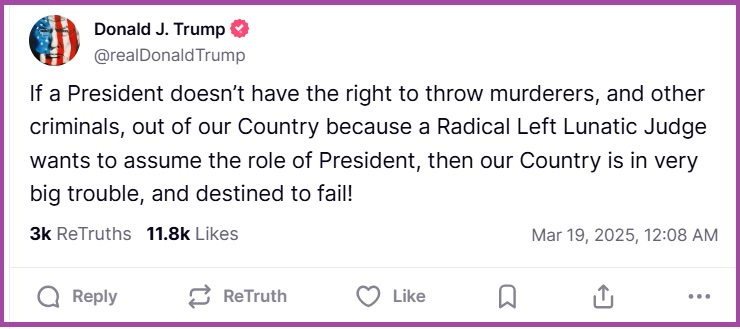
The FISA Court knowingly and with specific intent approved the Title-1 surveillance warrant which was filed using false evidence (Clinesmith) and sketchy supporting documents (Steele Dossier), no Woods File was attached.
At the time of the application, Mary McCord was acting head of the DOJ National Security Division. McCord was responsible for filing the warrant application. The DOJ-NSD had no inspector general oversight. The targeting of candidate Donald Trump was entirely for political purposes and intents.
After President Trump won the 2016 election, he gave DOJ Inspector General Michael Horowitz authority to conduct oversight over the DOJ-NSD. IG Horowitz started investigating the FISA application. This is where things get interesting.
The FISA Court (FISC) was exposed by their willful blindness in allowing the Title-1 targeting of Donald Trump.
Justice John Roberts is in charge of the FISC.
Supreme Court Chief Justice John Roberts then appointed Judge James Boasberg to the position of presiding judge over the FISA Court (FISC).
Judge Boasberg then selected Mary McCord to be an amicus or advisor to the court as Horowitz was investigating the fraudulent FISA application.
Boasberg put the person who was in charge of submitting the false FISA application in a position to filter the results of the Horowitz investigation of that same FISA application.
In essence, think of this as protecting the Judicial Branch. Justice Roberts appointed Boasberg to defend the FISC from scrutiny. Boasberg then moves Mary McCord into position to defend the FISC from scrutiny (McCord also protects herself).
At the time, Mary McCord’s husband Sheldon Snook was working within Justice Robert’s office.
That’s how John Roberts, James Boasberg and Mary McCord all connect. All the motives and intents go back to that original Title-1 FISA application.
Remember, this was a huge scandal all by itself. The FISA Court permitted a full-throated surveillance warrant against the leading presidential candidate, Donald Trump. The Judicial Branch was intentionally influencing the 2016 election. These are not stupid people; they were not duped, conned or fooled, they knew exactly what they were doing.
After appointing Mary McCord to take up a defensive position for herself and the FISA Court (cover), Judge Boasberg then becomes the presiding judge in the case against the FBI agent who falsified the FISA application, Kevin Clinesmith. Boasberg gives Clinesmith a slap on the wrist and a few months’ probation (more cover).
This is the same Judge Boasberg gave J6 FBI agent provocateur Ray Epps a sentence of probation. This is the same judge who, on his vacation, went to sit in the DC courtroom to observe defendant President Trump who was forced to appear in DC court. This is the same Boasberg who established a horrible precedent by forcing Vice-President Mike Pence to testify before a DC grand jury about his conversations with President Trump (breaking executive privilege).
♦ Now we go back to the John Durham investigation, because Bill Barr had to ask Presiding Judge Boasberg for guidance and direction as the Durham team looked at the FISA application (Title-1 surveillance warrant) against the backdrop of the Obama government targeting Donald Trump.
Now, keep in mind, with hindsight we know the DOJ (Bill Barr) was essentially walking a fine line between uncovering information and trying to protect the DOJ as an institution. John Durham was never approved to investigate the government side of the Trump-Russia collusion nonsense.
At the same time, Judge Boasberg is trying to protect the FISC from their culpability and also protect the FISA Court as an institution. Everyone has an agenda here, and none of them are good.
That leads to Boasberg outlining a cautious approach toward distribution and/or sunlight on what took place. On this issue the court says allowing a target to escape prosecution is part of the penalty upon the DOJ for wrongful assembly; a nice way to cover the issue.
Judge Boasberg does not consider the DOJ is targeting the “assemblers” for their criminal conduct. Rather his response is general toward criminals who were targets of a FISA application assembled with corrupt intent. It seemed a little weird at the time, now notsomuch.
Pages #11 and #12 hit the topic of FOIA production. Boasberg says “some” FOIA requests might warrant document distribution, but not all. However, on the topic of Carter Page getting his FOIA fulfilled, the court supports expansive distribution to Mr. Page alone.
I find the arguments and issues in/around page #14 to be especially noteworthy. In this segment Judge Boasberg is responding to the underlying raw evidence that would normally be used to assemble a “woods file”. The court notes the FBI Sentinel system would contain the minimized outcomes (redacted evidence) and this points to a bigger issue.
In response to this inquiry Judge Boasberg notes FBI investigators would have access to the minimized information within the Sentinel system; however, insofar as there was additional inquiry into the raw and non-minimized intelligence, a review and distribution would be permissible so long as there was a strong filter team in place to ensure statutes surrounding FISA securities (minimization requirements) were not violated.
Overall, Judge Boasberg gives permission and approval for all six aspects Bill Barr requested. However, he does so with several legal qualifiers and distinctions which the DOJ was told to observe. Those qualifiers were intended to protect the interests of both Main Justice and the FISA Court from sunlight upon their prior conduct in 2016.
SUMMARY – Judge Boasberg has been demonstrably political in all his determinations going all the way back to his position on the FISC when the FISA application was approved. Boasberg was then moved into position to protect the FISC from the outcome of their Title-1 search warrant approval.
Boasberg then used his position as Presiding FISC judge to protect the apparatus, while using his position as DC Circuit Court Judge to diminish, obfuscate and cloud the severe ramifications from all of the DC effort, including his rulings on the Kevin Clinesmith (FBI Agent) and Ray Epps (FBI Source) cases.
Judge Boasberg sits at the epicenter of a thoroughly corrupt and compromised DC court system.
More at:


More Stories
Microsoft reportedly offers voluntary buyouts to 60,000 employees as an attempt to trim costs
Stunning Sharyl Attkisson Report: Breitbart, Gateway Pundit, FOX, NY Post Being Shut Out on Yahoo, MSN and other Major Online News Platforms
Biden’s immigration failures went far beyond the border